Overview
LHADDAS (Local-scale High-resolution Atmospheric Dispersion and Dose Assessment System) is a computational system designed to calculate the complex atmospheric concentration and deposition distribution of radioactive materials within a few kilometers from the release point. It also enables detailed dose assessment from these radioactive materials, taking into account the shielding effects of buildings.
Many existing atmospheric dispersion prediction systems focus on wide-area environmental impact and population exposure assessment for radioactive releases from nuclear facilities. These systems typically evaluate areas spanning 100km to several thousand kilometers, using relatively coarse grids of hundreds of meters to several kilometers to reproduce wind patterns in the target area. However, they often fail to accurately reproduce complex wind flows influenced by buildings within nuclear facilities or urban areas, hindering detailed atmospheric dispersion calculations that reflect complex radioactive material distributions and building shielding, thus limiting accurate dose assessment.
To address this, we developed a computational code that combines LOHDIM-LES, a highresolution atmospheric dispersion calculation code incorporating a turbulence model capable of reproducing complex airflow by considering the influence of individual buildings, and SIBYL, a dose rate assessment code that calculates the behavior of radiation in a three-dimensional system considering building shielding effects. The accuracy of the atmospheric dispersion calculations was verified using diverse terrain, building, and meteorological condition data obtained from wind tunnel experiments and field dispersion experiments. The validity of the dose rate calculations was confirmed using real-world radiation monitoring data, demonstrating high predictive performance applicable to various events. Furthermore, we incorporated CityLBM, a high-speed calculation code for atmospheric dispersion of gases released in urban areas, to develop LHADDAS, an analytical system capable of addressing various challenges in local atmospheric dispersion.
System and model description
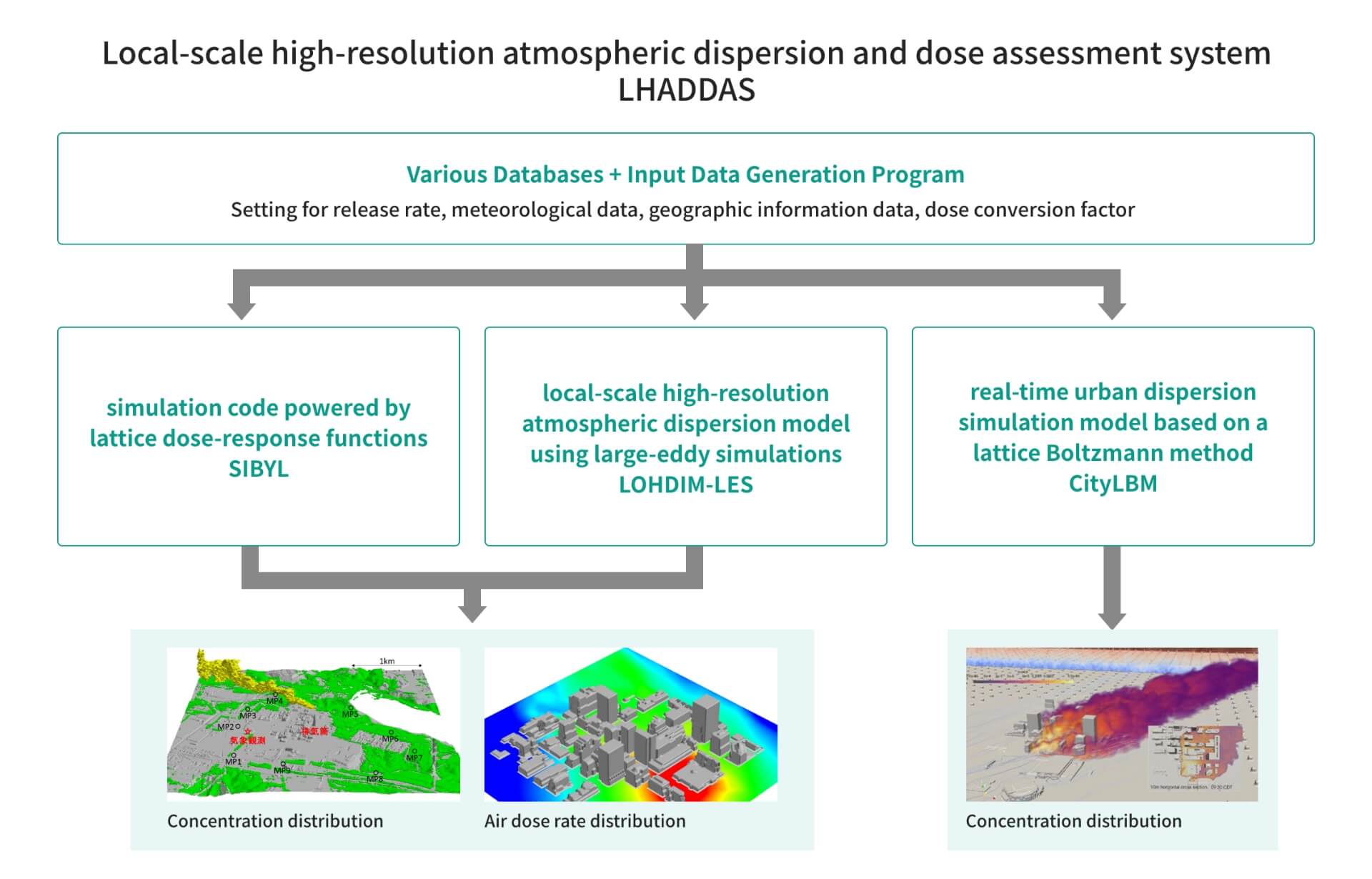
LHADDAS is composed of four functional modules.
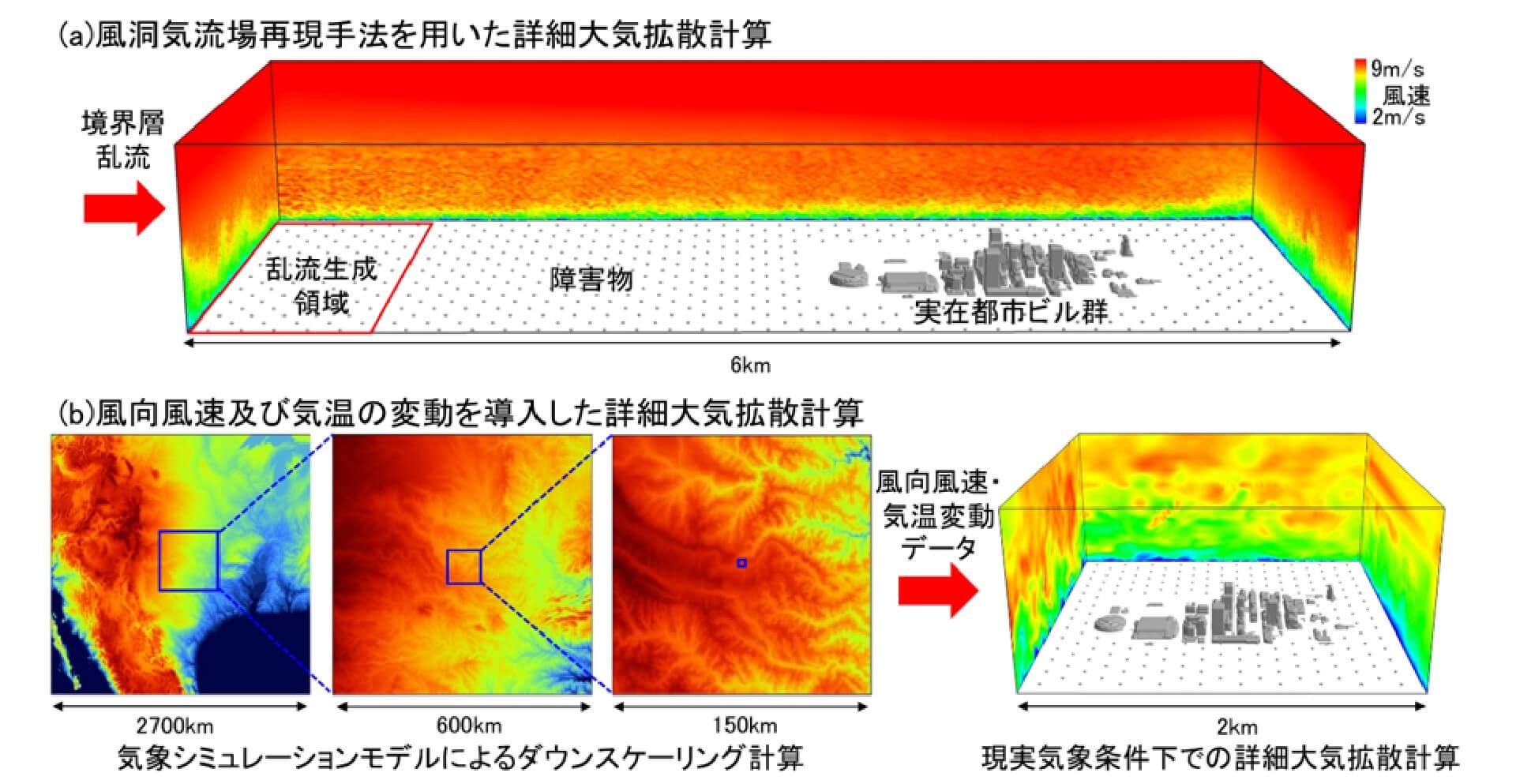
LOHDIM-LES: Local-scale High-resolution Atmospheric Dispersion Calculation Code has been developed using a high-resolution computational grid capable of detailed resolution of individual buildings and an LES (Large-Eddy Simulation) turbulence model known for its excellent unsteady turbulence analysis. The use of LES enables the reproduction of complex airflow around buildings, which were previously difficult to reproduce with conventional meteorological models like SPEEDI and WSPEEDI. However, since LES focuses on highresolution local calculations, it requires the influence of wide-area terrain and meteorological conditions to be specified as boundary conditions. To address this, we developed a wind tunnel flow field reproduction method that creates turbulent boundary layer flows upstream of the computational domain, and appropriately places obstacles on the ground to generate arbitrary airflow and turbulent flow fields (Figure 2), similar to wind tunnel experiments. This calculation code has been used for atmospheric dispersion calculations targeting flat terrain, hilly areas, individual buildings, multiple building configurations, and even building complexes in real cities. It has demonstrated the ability to reproduce dispersion events equivalent to wind tunnel experiments in complex turbulent flows where flow collisions, separation, and circulation occur, and it can also be used to elucidate detailed dispersion behaviors that cannot be obtained in wind tunnel experiments.
CityLBM is a high-speed computational code for atmospheric dispersion in urban areas. It utilizes the Lattice Boltzmann Method (LBM), a fluid dynamics simulation technique, to solve the time evolution equations of velocity distributions with multiple directions. Developed for cutting-edge supercomputers equipped with powerful GPUs, CityLBM leverages the parallel processing capabilities of thousands of GPU cores to significantly reduce computation time compared to traditional CPU-based codes.
SYBYL is a computational code enabling rapid dose rate calculation. It utilizes 3D radiation field data from LOHDIM-LES atmospheric diffusion simulations, coupled with a preestablished database of radionuclide dose contribution functions, to provide immediate dose rate estimates at evaluation locations. As shown in Figure 3, the code calculates the dose rate contribution from each radioactive isotope within each calculation grid, even for omplex atmospheric concentration and deposition patterns. By summing these contributions from all calculation grids, the ground-level dose rate at the evaluation point is determined. Additionally, it accounts for shielding effects from buildings by identifying structures along the path between the radiation source and the dose rate evaluation point and applying radiation attenuation based on the distance through these buildings to the dose rates from each calculation grid.
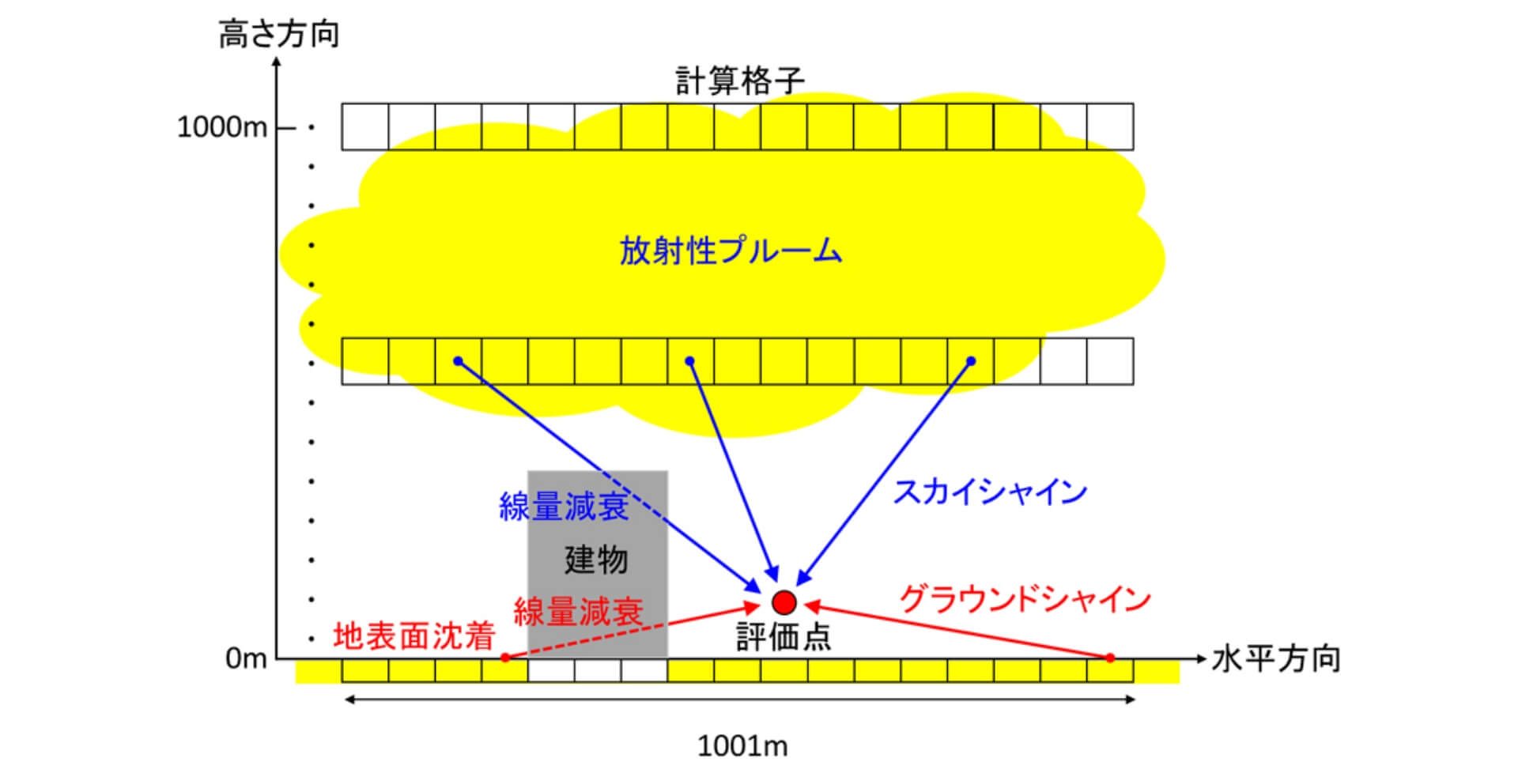
LHADDAS includes various functions to support calculations, such as a response function database and a program for creating calculation grids and input conditions from meteorological and geographic data. The response function database, in particular, was created using the PHITS radiation transport analysis code. This involved detailed 3D radiation transport calculations, considering direct and scattered components. Response functions convert the dose rate contribution received by a 1m-high evaluation point from a unit radionuclide concentration (1 Bq/m3) or deposition density (1 Bq/m2) in a 1m3 volume or 1m2 surface area, respectively, for each radioactive isotope. They are defined as functions of the horizontal distance between the source and the evaluation point. The first version of the database contains data for nine radioactive isotopes: 134Cs, 136Cs, 137Cs, 131I, 132I, 133I, 132Te, 85Kr, and 133Xe.
【Application Example 1: Atmospheric Diffusion Calculation in Urban Areas under Realistic Meteorological Conditions】
To extend the LOHDIM-LES code for detailed atmospheric diffusion prediction under realistic meteorological conditions not feasible in wind tunnel experiments, we developed a method using results from weather models or meteorological observation data to introduce variations in wind direction, wind speed, and temperature (Figure 4).
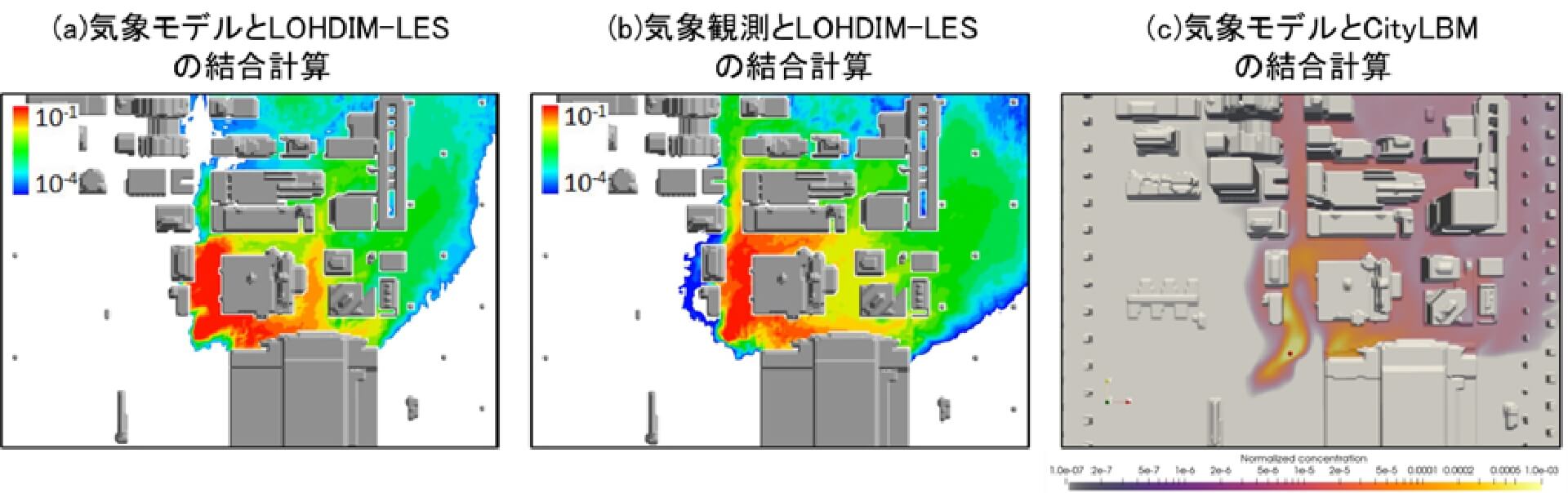
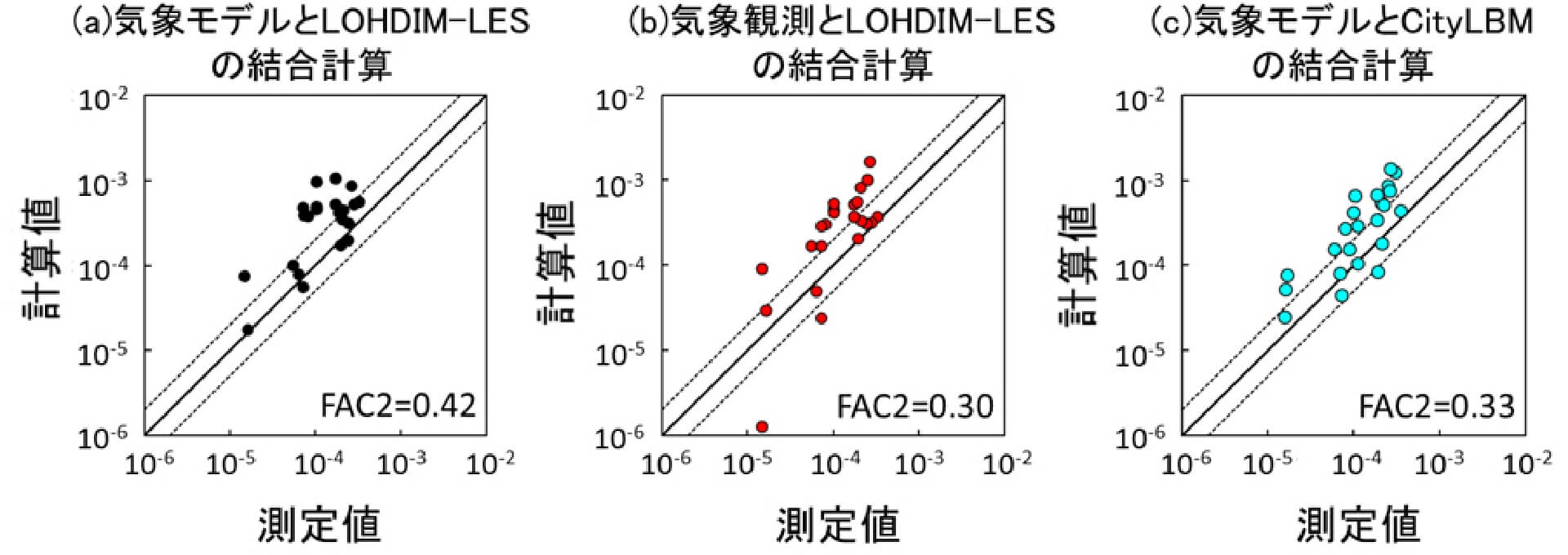
A test calculation was performed using outdoor diffusion experiments (Oklahoma City, USA, 2003) as the target. A gas released from a point source was carried downwind while maintaining high concentrations along major roads within the urban area, and its complex diffusion into buildings was clearly captured (Figure 4). The calculated average concentrations in the atmosphere using LOHDIM-LES coupled with a weather model showed a reproduction accuracy (FAC2) of approximately 42% and 30% within the range of 0.5 to 2 times the measured values (Figure 5).
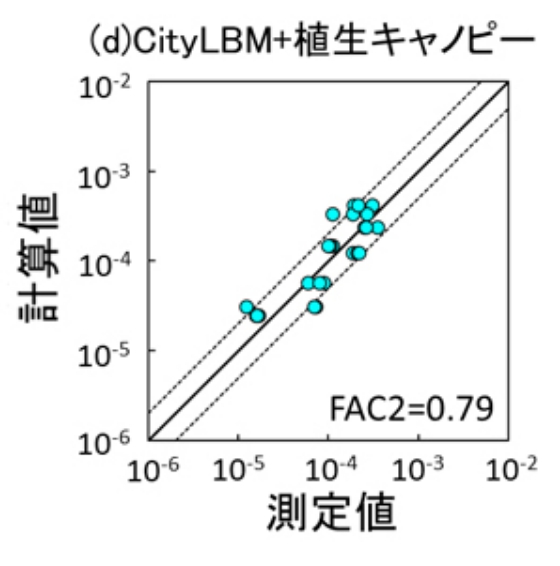
Furthermore, the calculation method using a weather model was introduced into CityLBM, and a test calculation was performed, resulting in a FAC2 of 33%. Since FAC2 values above 30% are recommended as a performance evaluation index, both LOHDIM-LES and CityLBM confirmed the ability to reliably reproduce measurement results. Additionally, CityLBM's high-speed calculation technology was utilized to estimate the configuration of vegetation canopies near the release point from aerial photographs and consider them as calculation parameters. Comparative analysis of the calculation results demonstrated a maximum FAC2 of 79% (Figure 6). This demonstrated that CityLBM can also be used for factor analysis to investigate the factors contributing to errors with measurement values.
【Application Example 2: Atmospheric Dispersion and Dose Rate Assessment at a Nuclear Facility】
This section details a comprehensive evaluation of atmospheric dispersion and dose rate assessment using LHADDAS, based on monitoring data from the test operation of the Rokkasho Reprocessing Plant in Aomori Prefecture (2006-2008). Monitoring posts within the site measured the atmospheric concentration of the radiogenic noble gas 85Kr and spatial dose rate released during the test operation. LHADDAS was used to reproduce these measurements.
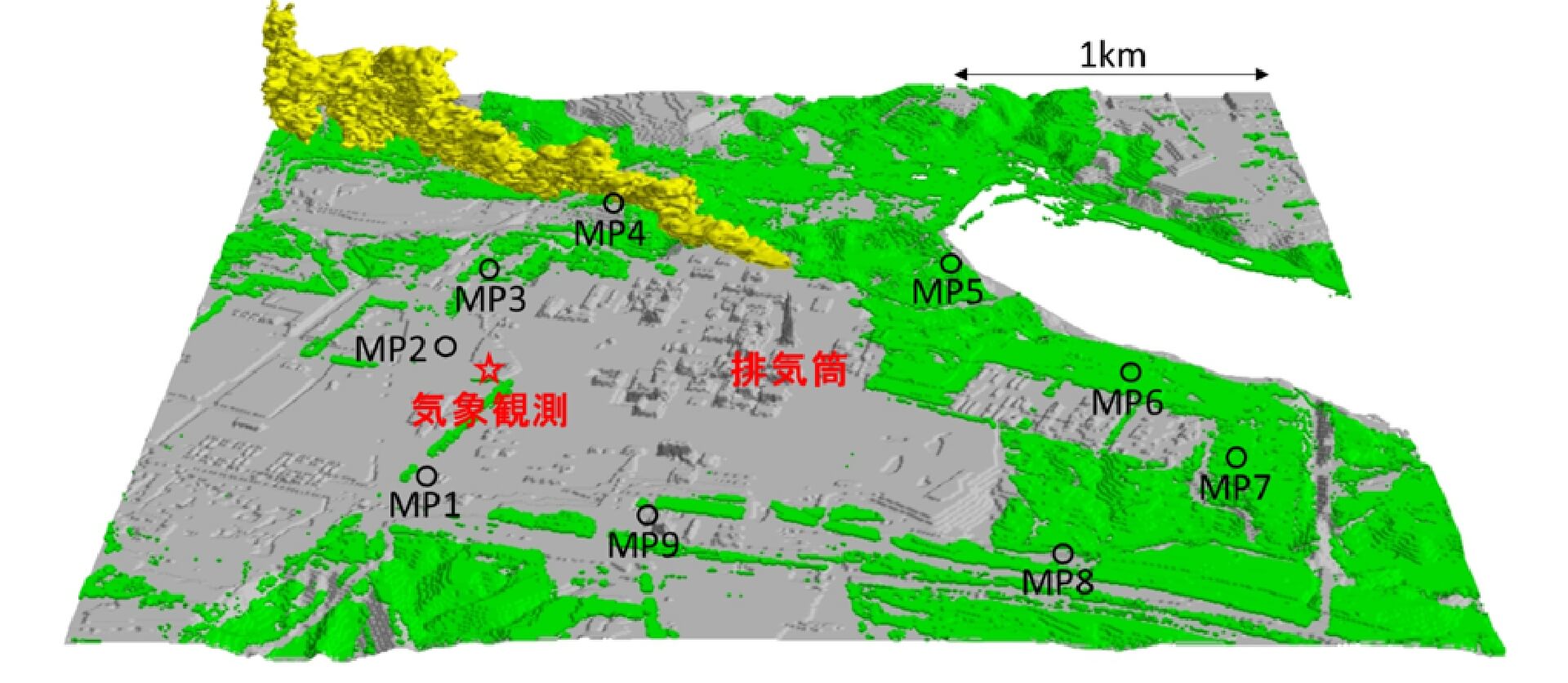
Initially, the atmospheric dispersion of 85Kr released from the reprocessing plant's stack was simulated using the LOHDIM-LES atmospheric dispersion code within LHADDAS. This simulation employed detailed geographic information, resolving elevation, buildings, and vegetation distribution with a 5m high-resolution grid. Figure 7 illustrates the calculated 85Kr atmospheric concentration distribution.
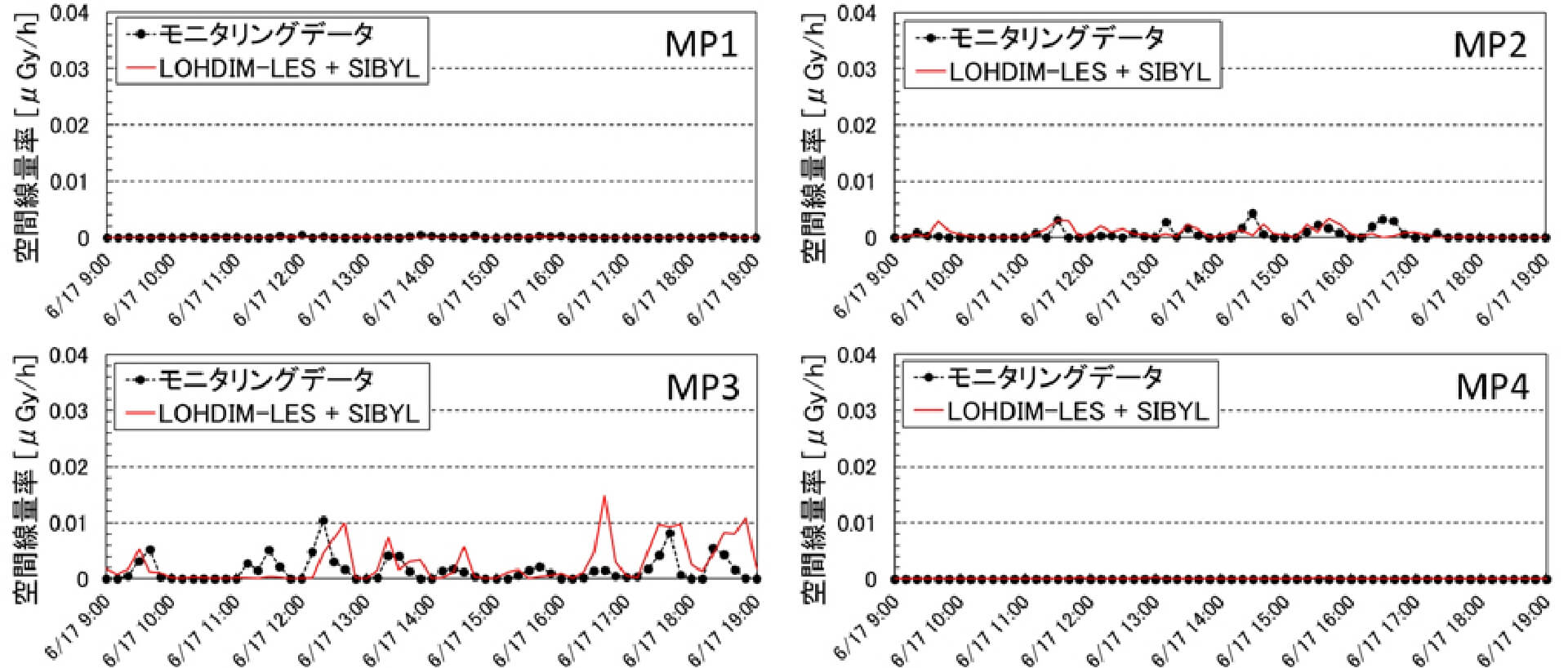
Subsequently, dose rate assessment was performed using the SIBYL dose assessment code, considering building shielding effects based on the 3D 85Kr concentration distribution from LOHDIM-LES. As shown in Figure 8, the calculated results successfully reproduced the measured spatial dose rate values from the on-site monitoring posts. This demonstrates the performance of LHADDAS in atmospheric dispersion and dose rate assessment for realistic scenarios.
Utilization for various applications
LHADDAS offers a flexible approach to addressing diverse challenges in localized atmospheric dispersion by allowing for the appropriate selection and combination of computational codes. The following are key areas where LHADDAS can be effectively utilized:
- Realistic Assessment for Wind Tunnel Experiments in Nuclear Facility Safety Reviews:Current guidelines rely on wind tunnel experiments to determine the effective release height and estimate dispersion using simplified atmospheric dispersion equations. However, wind tunnel experiments are costly, time-consuming, and may not accurately represent real-world conditions. LHADDAS, with its wind tunnel-equivalent or superior performance and ability to replicate realistic dispersion events, can replace these experiments. The detailed analytical data generated by LHADDAS can serve as a reference for validating and tuning simplified dispersion codes used in emergency response.
- Dose Assessment for Facility and Personnel Exposure During Nuclear Accidents:Regulations stipulate that radiation exposure for personnel in control rooms and emergency response centers during a major accident (like Fukushima) should not exceed 100 mSv over 7 days. However, simplified dispersion equations used in current dose assessments fail to account for the complex, non-uniform concentration and deposition patterns influenced by reactor buildings. By leveraging LHADDAS, we can obtain detailed dose assessments for each individual exposure pathway, improving emergency response planning.
- Pollution Situation Assessment and Dose Evaluation for Radioactive Material Dispersion Terrorism in Urban Areas:Urban environments with dense building arrangements create highly complex atmospheric dispersion patterns. The resulting distribution of airborne radioactive materials and deposition on buildings is highly uneven. Combining LHADDAS with SIBYL, and incorporating detailed building configurations, allows for accurate dispersion and dose calculations. This is valuable for pre-disaster planning and post-disaster detailed analysis of terrorism response. Furthermore, CityLBM enables rapid dispersion calculations for immediate assessments during a dispersion event.
- Reference Data for Validating and Tuning Simplified Dispersion Codes:While LHADDAS currently requires significant computational time, it can be used to generate reference data for validating and tuning simplified dispersion codes for immediate response applications. Wind tunnel and field experiments are typically used for code validation. LHADDAS has demonstrated performance equivalent to or exceeding wind tunnel experiments and can reproduce realistic dispersion events. Therefore, the analytical data generated by LHADDAS can replace wind tunnel and field experiments for validating and tuning simplified dispersion codes.
CityLBM's ability to consider vegetation, in addition to buildings, significantly impacts groundlevel wind conditions. Its computational efficiency allows for the analysis of factors affecting calculation accuracy, enabling more reliable dispersion modeling.
Code release information
References
Nakayama, H., Onodera, N., Satoh, D. (2023). 局所域⾼分解能⼤気拡散・線量評価システム LHADDAS; 建物を考慮した詳細な放射性物質の拡散計算に基づく線量評価を初めて実現. Isotope News, 785, 20-23. (Japanese only)