About us
The Environmental Dynamics Research Group develops and refines models, prediction systems, and analytical
methods to assess the environmental impacts of radioactive material releases and contamination events across
the atmosphere, land, and oceans.
To ensure model accuracy, we collect and analyze environmental samples
through targeted surveys and fieldwork.
Our research also investigates material cycling using both
radioactive and stable isotopes, further validating our models and contributing to solutions for pressing
global challenges, including climate change.
News
-
- 2026/10/14
- The following research result has been announced in a press
release (2026.10.09).
スギ林の最適管理が日本のカーボンニュートラル達成の鍵-新開発モデルで「気候変動対策」と「経済的利益」を両立させる持続可能な仕組みを提案-
-
- 2026/10/14
- A research paper has been published.
Satoh, Y., Tani, T., Ikenoue, T., Kawamura, H. (2026) Development and simulation of a numerical model for evaluating the accumulation potential of tritium released from Fukushima Daiichi Nuclear Power Station in edible seaweed along the Fukushima coast Marine Pollution Bulletin
-
- 2026/10/14
- A research paper has been published.
Nakayama, M., Suzuki, Y., Abe, Y., Taniguchi, T., Atarashi-Andoh, M., Koarashi, J., Nagano, H. (2026) Effects of repeated severe dry-wet cycles on nitrogen mineralization processes and associated microbial genes in humid temperate forest soils Journal of Forest Research
-
- 2026/10/14
- A research paper has been published.
Suzuki, Y., Hiradate, S., Koarashi, J., Atarashi-Andoh, M., Suzuki, K., Nakayama, M., Abe, Y., Hikosaka, K., Kajino, H., Sase, H., Urakawa, R., Nagano, H. (2026) An evaluation on contribution of organo-metal complexes to enhanced soil CO2 release during drying-rewetting cycles using buried humic horizon soils Progress in Earth and Planetary Science
-
- 2026/10/14
- Ms. Kanako Miyazaki, a research staff member, has received the FY2025 Encouragement
Award from the Health Physics and Environmental Science Division of the Atomic Energy Society of
Japan (2026.09.09).
2025 Fall Meeting: Quantitative estimation of initial dispersion of radioactive Cesium-rich microparticles released from Fukushima Daiichi Nuclear Power Plant
-
- 2026/10/14
- A research paper has been published.
Ota, M., Takagi, K., Liang, N., Takahashi, Y., Koarashi, J. (2026) Sustainable management for Japan's cedar stands towards national carbon neutrality Resources
-
- 2026/10/14
- A research paper has been published.
Ikenoue, T., Nakanishi, T., Kawamura, H. (2026) Long-term simulation of 137Cs behavior in the ocean around Fukushima considering multiphase interaction processes Marine Pollution Bulletin
-
- 2026/06/16
- ClearSkyScience featured our research findings.
Progressive release of long-stored carbon from tropical peatland disturbances
-
- 2026/06/02
- Dr. Tsubasa Ikenoue gave a talk at the seminer of Japan Society on Water
Environment.
陸域・河川における放射性セシウムのモニタリングとモデリング(Monitoring and Modeling Radioactive Cesium in Terrestrial and Aquatic Environments)(invited talk)
-
- 2026/06/02
- The following research result has been announced in a press
release(2026.05.28).
熱帯の泥炭地の炭素貯蔵庫が崩壊の危機-人間の活動が放つ「過去3,000年分の炭素」が地球温暖化を加速させる-(Tropical peatlands' carbon store faces collapse-"3,000 years of carbon" from human activities is accelerating global warming)
-
- 2026/06/02
- A research paper has been published.
Suzuki, T., Otosaka, S., Takata, H., Kuwabara, J., Nakanishi, T., Ikenoue, T. (2026) Long-Term Variations in 129I Seawater Concentrations off Fukushima and Potential of 129I as an Oceanographic Tracer for ALPS-Treated Water. Environmental Science & Technology, 60(17).
-
- 2026/04/21
- A research paper has been published.
Miyazaki, K., Fueda, K., Kadowaki, M., Terada, H., Kozai, N., Iwata, H., Horie, K., Takehara, M., Yamasaki, S., Grambow, B., Law, G.T.W., Ewing R.C., Utsunomiya, S. (2026) Uncovering Hidden Dispersion Patterns of Radioactive Cesium-Rich Microparticles from Fukushima Daiichi. Journal of Hazardous Materials, 142180.
Research
Environmental science
digital twins
We are engaged in research and development to understand the environmental behavior of environmentally hazardous substances, including radioactive substances. We have developed models and systems to simulate the transfer process of various substances in the atmosphere, land, hydrosphere, and biosphere, and aim to understand the material circulation in each sphere. In recent years, we have been working on research and development of environmental behavior digital twins that can comprehensively evaluate the environmental behavior of substances in each sphere by combining these multiple models.

- Atmospheric Dispersion Database System WSPEEDI-DB
- Local-scale High-resolution Atmospheric Dispersion and Dose Assessment System LHADDAS
- Atmosphere-soil-vegetation Model SOLVEG-R
- Short-Term Emergency Assessment system of Marine Environmental Radioactivity STEAMER
- Future Behavior of Radiocesium on Land-Prediction of Radiocesium Behavior on Land for 30 Years-
For other related research, please check JOPSS and researchmap of our group members.
Environmental material
circulation using
radioactive materials
and stable isotopes
Armed with analytical techniques for radioisotopes and stable isotopes in the environment, we are using a unique approach that uses them as tracers to understand the actual state of material circulation, elucidate mechanisms, and predict responses to climate change. We aim to evaluate the impact of substances released by human activities on the environment based on new knowledge gained from not only observations in real environments but also from laboratory experiments that simulate environmental changes, targeting a wide range of fields from forests and farmland to coastal oceans.
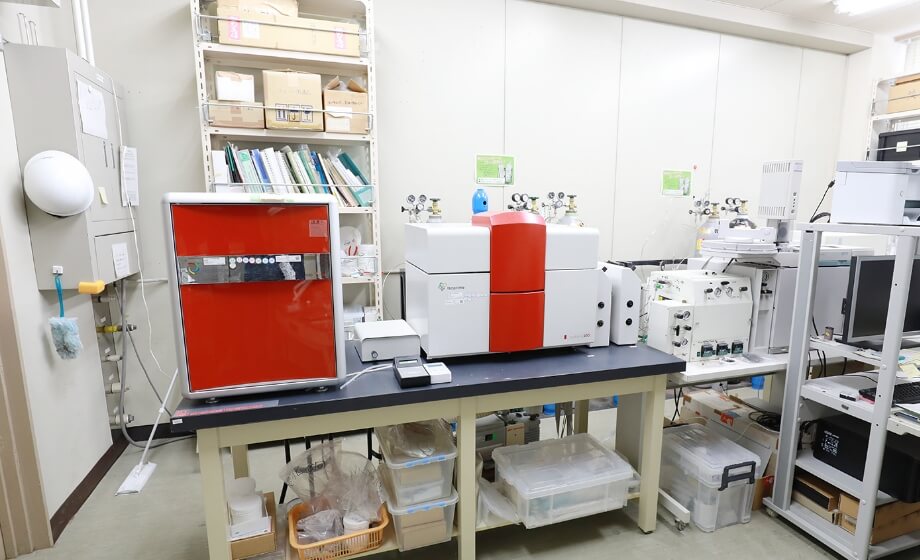
Carbon cycle research in forests and farmlands using radiocarbon (14C) as a tracer
- Forum for Nuclear Cooperation in Asia (FNCA) Climate Change Project
- Prediction for the future climate change impacts based on comprehensive observations of soil carbon dynamics in forests in Asia
- Digital-biosphere:Integrated biosphere
science for mitigating global environment change
(Grant-in-Aid for Scientific Research; KAKENHI, Transformative Research Area [A]) [A01] Prediction of forests that maximize carbon sequestration - Evaluation for the impact of converting and expanding tropical peat forests into oil palm plantations on carbon accumulation and circulation
- Carbon sequestration and circulation functions in deep soil
- The mechanisms that determine soil carbon storage capacity in forests and farmland and developing appropriate management techniques
- Carbon storage function through interactions between minerals and organic matter in soil
Ocean circulation structure and material circulation using artificial and natural radioisotopes as tracers
- Evaluation for carbon storage capacity of coastal sediments using radioisotopes
- Food web analysis in freshwater ecosystems using radiocarbon
Environmental dynamics of radionuclides from nuclear facilities
- Developing a highly sensitive analytical method for iodine-129 in environmental samples
- Dynamics of stable and radioactive iodine in marine and inland waters
For other related research, please check JOPSS and researchmap of our group members.
Fukushima Daiichi
Nuclear Power Plant
Accident
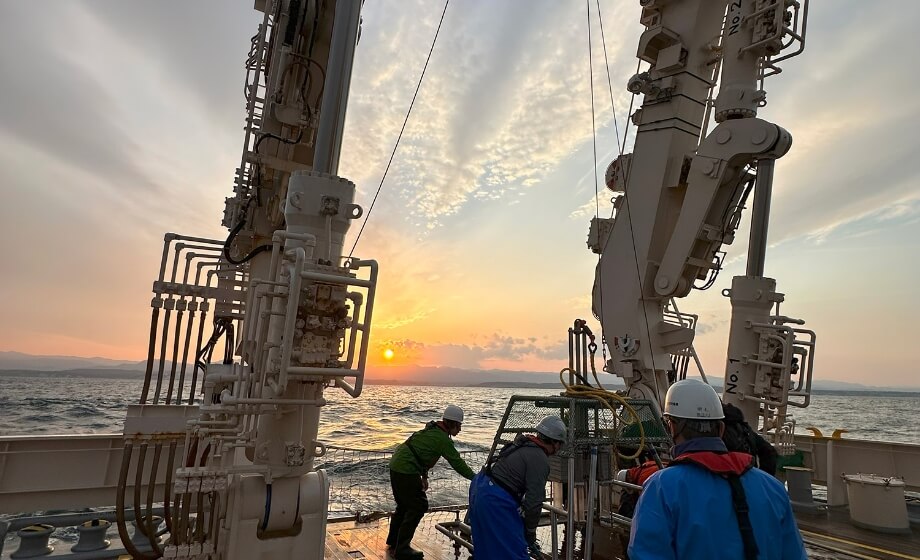
We have conducted surveys and research on the radioactive materials released during the Fukushima Daiichi Nuclear Power Plant accident. How did the radioactive materials spread into the environment immediately after the accident? And what will become of these radioactive materials in the future? To answer such as questions, we have been working to understand the current state of the radioactive materials resulting from the accident and predict their behavior through surveys of forests, oceans, and rivers, as well as laboratory experiments and computer simulations.
- Time Series
Observations in the Coastal Regions off Northern Ibaraki
-Factors Controlling Concentrations of Radiocesium in Seabed Sediment- - Retention of
Mobile Radiocesium in Forest Surface Soils
-Quantifying Microbial Uptake and Abiotic Adsorption- - The Migration of
Radioactive Iodine in Seawater
-Variation of Iodine-129 Concentration before and after the Accident at the TEPCO’s Fukushima Daiichi NPS- - Tracking
Pollutants in the Pacific Ocean
-Drift Simulation of Tsunami Debris due to the Great East Japan Earthquake- - Spatial
Variation in Radioactive-Cesium Deposition Caused by Topographical Factors
-Detailed Examination of the Air-Dose Rate in a Mountainous Forest Catchment- - How Long Does
Radiocesium Remain in Forest-Surface Litter?
-Radiocesium Transfer from Litter to Mineral Soil in Two Forest Types- - Exploring the
Migration of Radionuclides to the Deep Ocean
-Elucidation of Subduction from the Vertical Distribution of Concentration- - Reconstruction
of Atmospheric Release and Dispersion of Radioactive Materials by Computer Simulation
-Contribution to the Refinement of Dose Assessment in the Early Stage of the Accident by Improving the Dispersion Calculation Optimization Method-
For other related research, please check JOPSS and researchmap of our group members.
Member
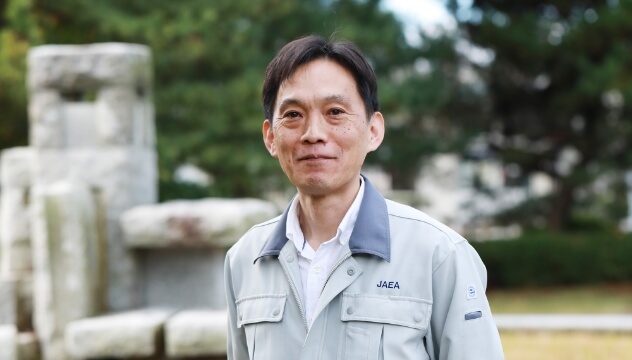
Hideyuki Kawamura
Field of expertise
Marine environment simulation, Oceanography
Degree
Doctor of Science
Topics
- Development of the marine radionuclide migration model SEA-GEARN
- Simulation of ocean diffusion of radioactive materials from the Fukushima nuclear accident
- Simulation of drifting debris from the Great East Japan Earthquake
- Development of an emergency marine environment radioactivity assessment system
- Development of a material circulation prediction model for the Sea of Japan
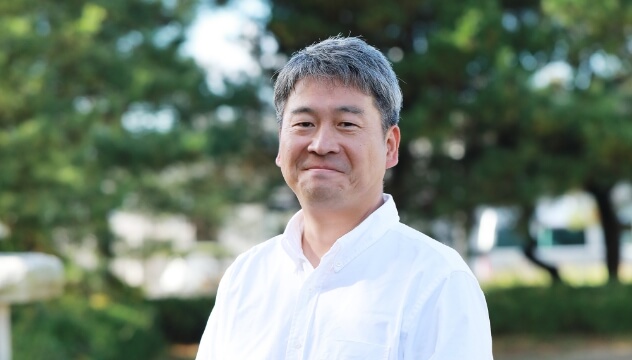
Hiroaki Terada
Field of expertise
Atmospheric dispersion simulation, Meteorology
Degree
Doctor of Engineering
Topics
- Improvement of the worldwide version of system for prediction of environmental emergency dose Information WSPEEDI
- Development and application of the atmospheric dispersion database system WSPEEDI-DB
- Reconstruction of Atmospheric Release and Dispersion of Radioactive Materials by Computer Simulation-Contribution to the Refinement of Dose Assessment in the Early Stage of the Accident by Improving the Dispersion Calculation Optimization Method-
- Improved Capability for Atmospheric Dispersion Simulation-Enhancement of Prediction Performance of WSPEEDI-II for Middle- Range Scale Dispersion using Krypton-85 Measurement Data-
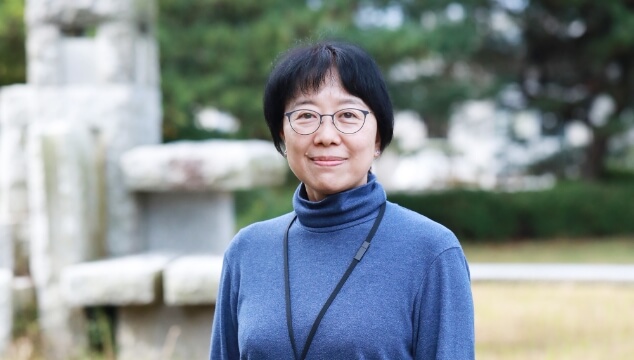
Mariko Andoh
Field of expertise
Environmental radioactivity, Isotope biogeochemistry
Degree
Doctor of Science
Topics
- Research into the behavior of substances in the environment using radiocarbon and stable isotopes
- Spatial Variation in Radioactive-Cesium Deposition Caused by Topographical Factors-Detailed Examination of the Air-Dose Rate in a Mountainous Forest Catchment-
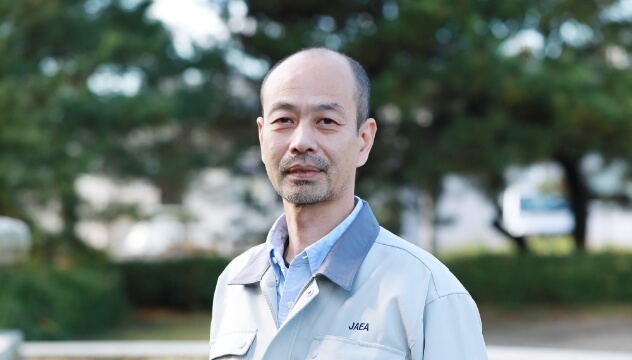
Katsunori Tsuduki
Field of expertise
Computer system administration
Degree
Doctor of Engineering
Topics
- Computer Management
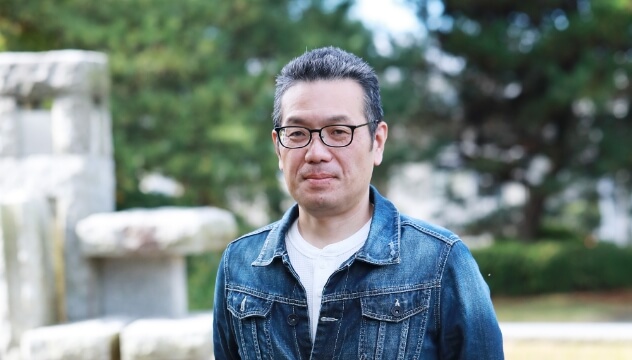
Takashi Suzuki
Field of expertise
Ocean survey, Iodine-129, Accelarator Mass Spectrometry
Degree
Doctor of Science
Topics
- Elucidation of factors affecting the concentration of iodine-129 in seawater discharged from nuclear facilities
- Elucidation of transport for radioactive iodine in the global-scale transport and coastal marine environments
- Development of a highly sensitive analytical method for iodine-129 in environmental samples
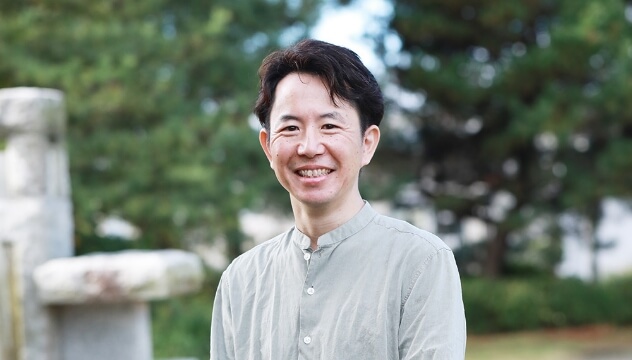
Takahiro Nakanishi
Field of expertise
Geochemistry, Environmental radioactivity, Oceanography
Degree
Doctor of Environmental Earth Science
Topics
- Research into the behavior of substances in the environment using radionuclides and stable isotopes
- Research into the environmental behavior of radionuclides originating from the Fukushima Daiichi Nuclear Power Plant accident

Hiromasa Nakayama
Field of expertise
Local scale atmospheric dispersion simulation
Degree
Doctor of Engineering
Topics
- Development of a local area high resolution atmospheric dispersion and dose assessment system
- Radiological and nuclear terrorism
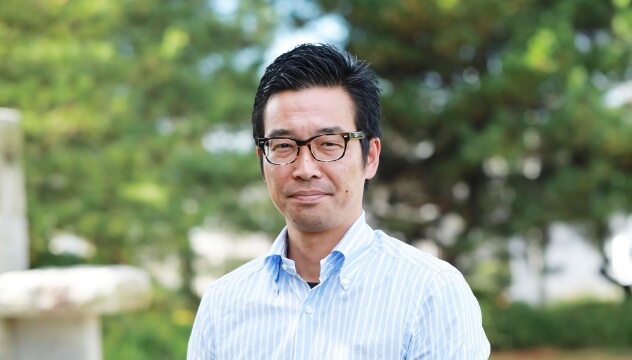
Masakazu Ota
Field of expertise
Material transports in land surface system
Degree
Doctor of Engineering
Topics
- Development of a land surface model
- Model simulation for transports of tritium, carbon-14, radioiodine, and radiocesium in atmosphere-vegetation-soil system
- Carbon cycling in land surface ecosystems (e.g. forests)
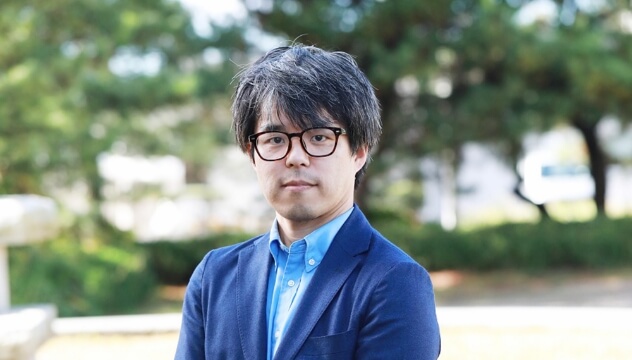
Masanao Kadowaki
Field of expertise
Atmospheric dispersion modeling, Atmospheric chemistry
Degree
Doctor of Science
Topics
- Radioactive iodine cycle in the environment using a chemical transport model
- Development of a multi-scale atmospheric dispersion model
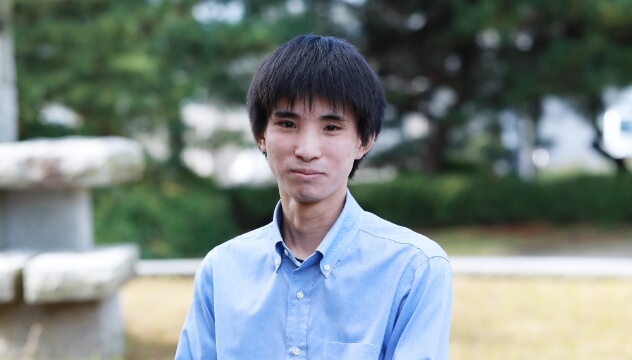
Tsubasa Ikenoue
Field of expertise
Environmental Engineering, Hydrology, Simulation of environmental fate
Degree
Doctor of Engineering
Topics
- Prediction of the behavior of radioactive substances in terrestrial, riverine, and marine environments
- Estimation of the transfer of radioactive substances to marine organisms
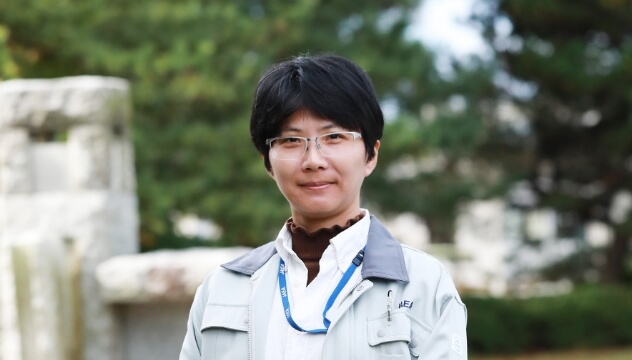
Rongwei Sun
Field of expertise
Environmental chemistry, Inorganic chemistry
Degree
Doctor of Engineering
Topics
- Mineral function in facilitating soil carbon sequestration
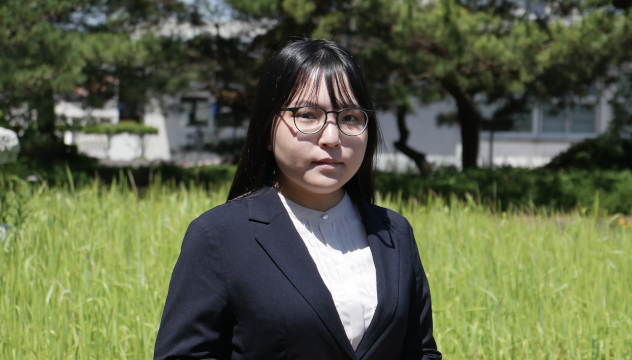
Toru Tanimori
Field of expertise
γ-Ray Astrophysics, High energy physics
Degree
Doctor of Science
Topics
- Establishment of a 3D dose diffusion prediction method and development of a method for investigating inside structures using differences in gamma-ray transmittance
Hiromi Nemoto
Topics
- Development of the atmospheric dispersion prediction system WSPEEDI
Hiroaki Suda
Topics
- Environmental Sample Analysis
Kikuko Yoshigaki
Topics
- Environmental Sample Analysis
Eiko Nishimura
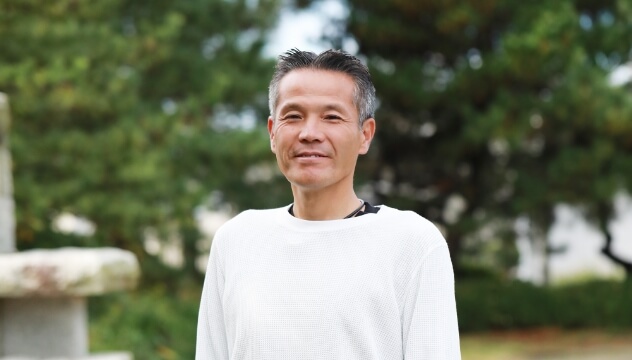
Jun Koarashi
Field of expertise
Isotope biogeochemistry, Radioecology
Degree
Doctor of Engineering
Topics
- Terrestrial carbon cycle and its feedback to climate change
- Behavior of radionuclides in the environment
- Microplastic environmental dynamics and their interplay with carbon cycling
Azusa Nagakubo
Field of expertise
Environmental science simulation
Degree
Doctor of Engineering
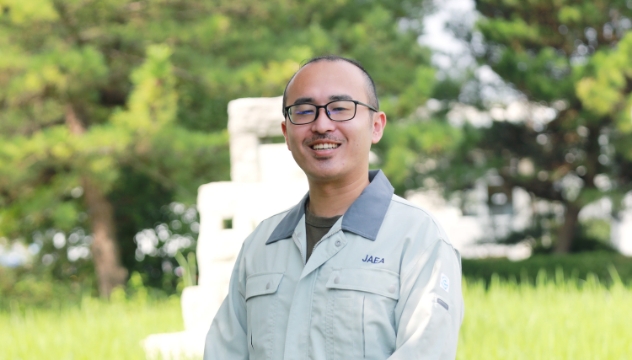
Kenta Irie
Field of expertise
Meteorology, Tropical cyclone, Urban precipitationDegree
Doctor of Science
Publications
Access・Contact
Japan Atomic Energy Agency
Nuclear Science Research Institute
Nuclear Science and Engineering
Center
Research Group for Environmental Science
2-4 Shirakata, Tokai-mura, Naka-gun, Ibaraki
319-1195, Japan
Tel: (+81)-29-282-5100